Uncategorised

The State of the Industry Address

The flurry of the London Book Fair is rippling through social feeds and newsletters across the globe. Deals were struck, panels were held, a few unexpected game changers emerged, and perhaps, most importantly, authors can try to get a read on what the next year might hold. During his keynote, Tom Weldon, CEO of Penguin Random House UK, offered a few thoughts that, in my humble opinion, deserve a closer look. Someone in Weldon’s position has the power to shift the industry, soothe long‑standing anxieties, and even speak for those of us who rarely get a seat at the table. But it’s what he doesn’t say that’s worth paying attention to.

Writers are often told to find their people, a community of peers in the same boat. And yes, community matters. We learn from each other, we share resources, we lift the collective. But limiting ourselves to one camp can create an echo chamber. Exposure to different corners of the industry broadens our understanding and sharpens our decision‑making. Which is why I paid attention to what he had to say about indie authors.

According to Weldon, traditional publishing is watching, and learning from, the indie ecosystem. We’ve known this for years. How do you compete with a system you don’t understand? If readers are paying attention, we need to give attention where it’s due. Whenever someone asks me, “Which path is better, trad or self‑pub?” I always answer with caution. The choice is deeply personal, and both routes come with their own pros, cons, and nuances. But reading the various reports on Weldon’s speech, I can’t shake the sense that traditional houses are changing… just not fast enough. Hasn’t the pace always been a frustration? At the same time, it’s clear that indie authors are making a dent too big to ignore.

I also found it interesting that Weldon emphasised how the big houses can support indies. He’s not wrong. They have larger teams, deeper pockets, and more institutional clout. It’s part of why I pursued the traditional route myself. But in the same breath, I can’t help wondering if he is taking steps to close the gaps. (Can you tell I love playing devil’s advocate?)

Traditional publishing is built on the “yes” game. First, an agent must say yes. Then an editor. Then the editor’s team. Then acquisitions. Then sales. Then marketing. The publication of a single manuscript requires a chain of approvals. I’ve heared the number is thirteen people, give or take. Only then do negotiations begin. Months, sometimes years, pass before a book reaches readers. And yes, the advance can make the wait worthwhile. But is that all indie authors are looking for? Only you can answer that.

More and more industry professionals I speak to are landing on the same conclusion: the future is hybrid. Each writer must choose what’s right for them, of course, but a hybrid career offers the best of both worlds. You learn from a wide spectrum of professionals, you adapt, you pivot, you refine as your career evolves. Naturally, this path comes with its own complications. Which leads me to the real question.

Why don’t indies or even authors as a whole, have a unified space equivalent to the London Book Fair? Decades into this split industry, most authors operate in isolated pockets rather than as a collective. Imagine a space designed to level the playing field, where indie authors gather not as an afterthought but as a force. Perhaps that’s the future we should be building toward?

*This is an opinion piece and does not represent the views of the organisation, or its members.

Written by Arini Vlotman, Romance Author

www.arinivlotman.co.za

2024 Imbali Award

2024 Imbali Award

And the winner is……(we all wait with bated breath)……Meg Chronis for The Seven Day Switch!

Bosnimf and Liefde met ‘a uitklophou were worthy second and third place winners.

A few words from Bailie Hantam, the organiser for the award this year:

This year, with only five English entrants, and three Afrikaans entrants, we decided to combine all the entries. The decision was not taken lightly but it was practical. In the future, unless we see a need to separate by language, this would be the way to go.

Each judge read a book in a genre they were familiar with to ensure the book was judged against the correct market. The exception was the Afrikaans entries where readers were not only familiar with the genre, but also understood the language as a first language. The result was that some of the judges actively looked for Afrikaans books after judging. How wonderful is that?

The only disqualifying factor was whether or not a book concluded with a Happily Ever After (HEA) and stories were weighted more if romance was a central part of the book. I am pleased to announce that no one was disqualified this year.

The number of entries was disappointing and I hope this will change in years to come. However, nothing can take away from the quality of the entries and the prestige of the award. Well done!

I would like to thank the following people – avid romance readers and people willing to judge the entries:

Rachelle Winter; Natasha McClear; Nadia Duvenage; Sanri Du Randt; Wesley Wessels; Bec Marshal; Jane McDougall; Kirsten Rolston

And finally, thank you to everyone who helped.

2024 ROSACon

2024 ROSACon

A report back by Kim Hunter

Wow! What can I say? Eight jam-packed hours of learning from eight learned speakers and then later, a brilliant talk from Keynote Speaker, Joss Woods at the Gala Dinner and Awards Evening. Nothing can top this for an author – except getting to mingle and chat with not only the speakers, but also the other authors attending the event.

Thank you to Mandy and her team for all the time and hard work which went into making this event the success it was. A highlight (and I’m only mentioning one because there were so many for me!) was the tree planting ceremony. ROSA has made an indelible mark in the form of a Cunonia capensis planted in honour of our conference at Misty Hills. What a thrill to know that tree will continue to grow roots deep into the earth long after we are gone – much in the way we hope ROSA will withstand the changing times and trends and will remain a part of the South African landscape for many years to come.

For those who opted to stay at Misty Hills, the event started on the Friday night with dinner at the Carnivore Restaurant. Mmmm, mmmm! Finger-licking good!

Despite the dreary weather, those staying over at Misty Hills had fireplaces to cuddle up to for breakfast.

We started the day with a warm welcome from Vice-Chair Person Mandy Verbaan, the co-ordinator of the event, followed by an informative talk about ‘Getting the most from StoryOrigin and Book Funnel‘, by the incredible Sian Claven. Pens scratched on paper as many notes were taken.

Jaws dropped as Christiaan Steyn from Steyn IP educated us on the difference between Trademarks and Copyright and so much more. At this point, I thought the event couldn’t get any better….

The delightful Cheryl from Willow Trading clued the attendees in on the ways to get our hardcopy books into South African bookshops. My take from this talk – it’s a nice to have but perhaps not worth much in terms of seeing a return on my investment. I’d love to know if anyone found it different to me.

Troubles with the sound did not deter me from listening to Samara Thorn, talking about ‘Writing as an Intuitive Author’. This Author and Coach suggested we look to where our intuitive strengths lie and so much more. For this talk alone, I would have paid double.

A very pregnant Nicolette Stephens still made her way to Misty Hills to enlighten us on ‘The “Science” of Blurb Writing’. I can’t thank you enough for coming through. The insights I gained into the skills of blurb writing was invaluable.

No images for the next talk because I had the honour of chatting with Jo Watson, Erika Bester, and AK MacBride, about ‘Where do Authors Spend the $$$ – winners and losers‘. These three successful authors each had a different take on which platforms they believe is the place to invest in advertising (or to simply have a vigorous presence) right now in 2024. Jo believes TikTok is the place to be, Erika firmly believes growing your email list with ardent fans is where you should be spending your marketing time and AK MacBride is keen on FaceBook. My take from this lively discussion was: PICK YOUR PLATFORM! We all become overwhelmed with the many choices we have, so choose one, learn how best to use it to your advantage and go for it!

Did you know your could learn so much from watching K-Dramas? I did not, so this talk from the knowledgable Romy Sommer on ‘What Authors can Learn from K-Dramas‘ blew my mind. Romy’s passion for writing and flexibility in how to structure a novel really came through in this talk.

Micaela White had the room in an uproar when we all learned #romance is a banned hashtag on Instagram! “Social Media Do’s and Don’ts for Authors’ was an eye-opener! I am truly grateful for all I learned during this talk.

And that wrapped up the day’s talks. In my opinion, well-worth the money it cost me (or the investment in my author career, if you want to be specific!) But it wasn’t only about the learning, it was also about spending time with like-minded people. People who have the same struggles and I do as an author. For me, THAT was the most invaluable part of the day.

I hope there will be another conference next year because I’ll be putting money into a special savings account dedicated to paying for me to attend. Any sacrifice to make my target will be well worth it.

July Book Recommendation

July Book Recommendation

What makes a romance novel a romance? How do you write a kissing book?

Writing a well-structured romance isn’t the same as writing any other genre—something the popular novel and screenwriting guides don’t address. The romance arc is made up of its own story beats, and the external plot and theme need to be braided to the romance arc—not the other way around. Told in conversational (and often irreverent) prose, Romancing the Beat can be read like you are itting down to coffee with romance editor and author Gwen Hayes while she explains story structure. The way she does with her clients. Some of whom are regular inhabitants of the New York Times and USA Today bestseller lists.

Romancing the Beat is a recipe, not a rigid system. The beats don’t care if you plot or outline before you write, or if you pants your way through the drafts and do a “beat check” when you’re revising. Pantsers and plotters are both welcome. So sit down, grab a cuppa, and let’s talk about kissing books.

Amazon link: https://www.amazon.com/Understanding-Show-Dont-Tell-Getting/dp/0991536436

Have you read this book? What did you think?

P.S. I use this little book with every single novel I write!

Three Graphic Design Tips for Romance Authors

Three Graphic Design Tips for Romance Authors

By Megan van Rooyen

As a romance author, you are well aware that the appeal of your story begins way before a reader flips the first page. We live in a digital age, and your books’ visual appeal plays an integral role in attracting the readership you desire. Here are three graphic design tips to help you captivate your readership and elevate your romance novels:

  1. Create an Eye-catching Book Cover

Your book cover is the first impression readers get of your book and the story within. A well designed cover not only captures your readers attention but also conveys the essence of your book. Here are some tips to make your covers stand out:

Highlight the genre: Do some research into the romance genre and see what is currently selling. At this moment in time, physical books with discreet covers sell better than explicit covers, while ebook readers seem to prefer the explicit covers. When doing this research note the types of fonts being used (typography), the colours, and the different types of covers, such as cartoon, floral etc.

Professional quality: Invest into a professional design service or small business. High-quality covers suggest high-quality story, further enhancing the appeal of your book.

  1. Design Engaging Social Media Graphics

Social media is one of the most powerful marketing tools for your books. Eye-catching graphics can help you stand out in a crowded feed and this will also encourage readers to learn more about your book. Here are some things to keep in mind:

Consistency is key: I know it is hard especially with the algorithms changing frequently, but try to maintain a consistent theme across all your social media platforms. Use a colour palette and font style that align with your books as well as yourself. You as an author is a brand, the perfect example of this is Willow Winters she has a specific colour palette and font, her merchandise are all also consistently branded.

Teasers and Quotes: create graphics that feature compelling quotes from your book as well as short teasers. Pair these with captivating images to create a sort of “hook” effect by capturing your ideal readers attention.

Promotional Posts: Have promotional content for promotions like sales, giveaways, book launch announcements, cover reveals etc. Make sure that these are visually appealing and clearly communicate the details.

  1. Utilize Interior Design Elements

While a cover encourages a reader to pick up your book, the interior design helps them to stay engaged as they read. A well-designed interior can enhance your readers’ experience and again reflect the quality of your work. Consider the following tips:

Typography Matters: Make sure to choose fonts that are easy to read and does not place strain on the reader’s eyes. Try to avoid overly decorative fonts in main body, keep the fun text for the chapter headings.

Chapter Headings: As mentioned above this is the place where your creativity can take flight, this enhances the reader’s experience, this can be simple and elegant, can be used to distinguish between characters etc. This can include stylized numbers, decorative elements or thematic imagery.

White Space: Ensure that there is enough white space in your layout. This makes your text more readable and less dense and overwhelming, thus allowing the reader to better immerse themselves within your story.

By focusing on some of these key elements of your book you can create visually appealing and comprehensive brand for your romance novels. Whether it’s through a beautiful book cover, engaging social media posts or unique interior, a great design and attention to details can captivate your audience and set your book apart in the competitive world of Romance literature.


Should you require professional designing services to bring your next romance novel to life, please feel free to reach out to me for collaborations.

Megan van Rooyen
Graphic Designer
www.moonlightmagicdesigns.co.za

Curing Writer’s Block

Curing Writer’s Block

When Your Imaginary Friends Won’t Talk To You

By Marilize Roos

We’ve all experienced it: That dreaded silence when your characters just won’t talk to you. You’re stuck, or feel you may have written yourself into a corner, and your characters just give you… nothing.

Crickets.

When asking writers about their process, most writers I’ve ever spoken to say their plots are driven by the characters. That the characters get up to their shenanigans all by themselves, and the writer just shows up to take down the incident report. Whether you’re a pantser, writing on the fly with only a basic destination in mind, or a plotter who plans a detailed itinerary for the story’s journey, our characters are the biggest determiners of how our story will develop.

When our characters stop talking to us, it is often an indication that we don’t know them well enough. Often, if their personality and backstory were better known to us, we might understand their motivation better, and consequently, what they’d do next. And one way to get to know and bond with someone, is to buy them a drink… or two… or more.

So my advice is… buy your characters a drink—and get them drunk.

In Vino Veritas

(Latin: “In Wine, there is truth.”)

Write a scene where your characters get drunk. This scene doesn’t even have to make it into your story, if it doesn’t fit into your story arc, but it’s still a worthwhile exercise if it jars you out of your writers’ block. In practice, I’ve included each of my drunk-scenes in the final story, purely because the results have been pure gold, and you often uncover key elements of your characters this way.

Here are a few points for you to ponder in your attempts to get your characters drunk:

1.       Do they normally drink?  

–          Are they usually tea-totalers, or even have an interest in alcohol?

–          Do they drink whatever everyone else is having, but only drink in company?

–          Do they go down to the pub every Friday for a few drinks?

–          Or do they take to the bottle every time disaster strikes?

–          Perhaps they’re alcoholics?

–          Perhaps they have a complicated relationship with alcohol, which makes them stay away from it most of the time

–          perhaps they have a glass of wine with every meal.

–          Do they normally not drink, but like to celebrate successes with a glass of something fine?

2.       What do they normally drink?

–          Beer/cider/wine cooler

–          Cheap wine?

–          Expensive wine?

–          Fancy cocktails, the kind normally served with an umbrella

–          Regular mixed cocktails, like rum and coke, gin and tonic, brandy and coke, or screwdrivers

–          Neat spirits, like brandy, whisky, bourbon, vodka

–          Non-alcoholic, like neat coke, water, rock shandy or Shirley Temple.

3.       What are they drinking now, and why?

–          Is it their favourite drink?

–          They normally drink something cheaper, but someone else is buying the drinks tonight?

–          Someone asked them to try this drink? (And if they’re unfamiliar with this drink, do they over-imbibe because they can’t tell how strong it is?)

–          Are they drinking it for the taste?

–          Are they drinking it to forget, or to numb their emotions?

–          Are they drinking it to lower inhibitions, and gain courage for something to come?

–          Are they drinking to fit in with a social group?

–          Are they drinking because it’s socially expected of them (such as at a bachelor party)?

4.       Where are they drinking now?

–          Pub

–          Restaurant

–          At home

–          A friend’s house

5.       Who’re they drinking with?

–          Alone at home

–          Alone at a bar, surrounded by strangers

–          They tried to go alone, but a friend went with them to look out for them

–          In a large group of family and friends

–          Out on a date

–          At a work function

6.       Are they eating anything?

–          Drinking on an empty stomach

–          Eating all the peanuts and pretzels on the bar

–          Ordering a meal with their drink

–          Drinking at home, they’re eating whatever they can scavenge out of the fridge

7.       How do they normally handle their alcohol?

–          How much do they normally drink?

–          How much do they normally drink before they get drunk?

8.       What do they look like when they’re drunk?

–          Do they get sick?

–          Are they maudlin, mean, aggressive, or happy?

–          Are they loud, or talkative, or do they get very quiet?

–          Is being drunk the only way they’d get up the courage to sing karaoke?

–          Do they just pass out, and their friends have to carry them home?

9.       How does this episode of drinking affect their relationships with their loved ones?

–          Not all drinking affects relationships badly, especially in the case of non-habitual drinkers.

–          Does someone take photographs or videos of their drunken antics?

–          Did someone have to come bail them out of jail?

10.   Why are they drinking now?

–          Worried

–          Scared

–          Stressed

–          Overwhelmed

–          Bachelor party

–          Girls’ night

–          To celebrate something

–          It’s Tuesday

–          After work function

The Aftermath…

11.   Does our character have a hangover? If he does, what does it look like?

–          Does he get sick?

–          Headache?

–          Dry mouth?

12.   Is anyone there to take care of them?

13.   Do they (or the person taking care of them) have a regular hangover remedy? What is it?

14.   If something is revealed to the friend in the drunken state, how does this affect their relationship?

These are, of course, just suggestions of things to consider for this exercise. You may think of other questions, or your characters might decide to steer you in another direction altogether. You may decide to include this exercise in your story, or keep it filed away.

But either way, your characters no longer have the option of staying silent. And perhaps the old Latin saying really is true…

In vino, veritas.


About Marilize

I started out writing South African Historical Romance, and published 6 Regency-era romances, but I took the plunge into writing BDSM romance in 2020 when I published my first book in the Club Angelus series, “Michael”.

I pride myself on writing about women who discover their inner strength. My heroes are Alpha, strong and protective, yet have a vulnerability about them. I also write characters of diverse sexual orientations, including MF, FF, FFM, MMF, and MM.

I adore animals. I’ve raised cats, dogs, horses and chickens, and I’ve worked as a riding instructor, trail guide and stable manager, even occasionally as horse handler on film sets and photo shoots. I’ve also worked as photographer’s assistant, PR consultant, freelance typist, admin assistant and contractor’s assistant.

I am a proud member of the Romance writers’ Organization of South Africa (ROSA).

www.marilizeroosromance.co.za/

June Book Recommendation

June Book Recommendation

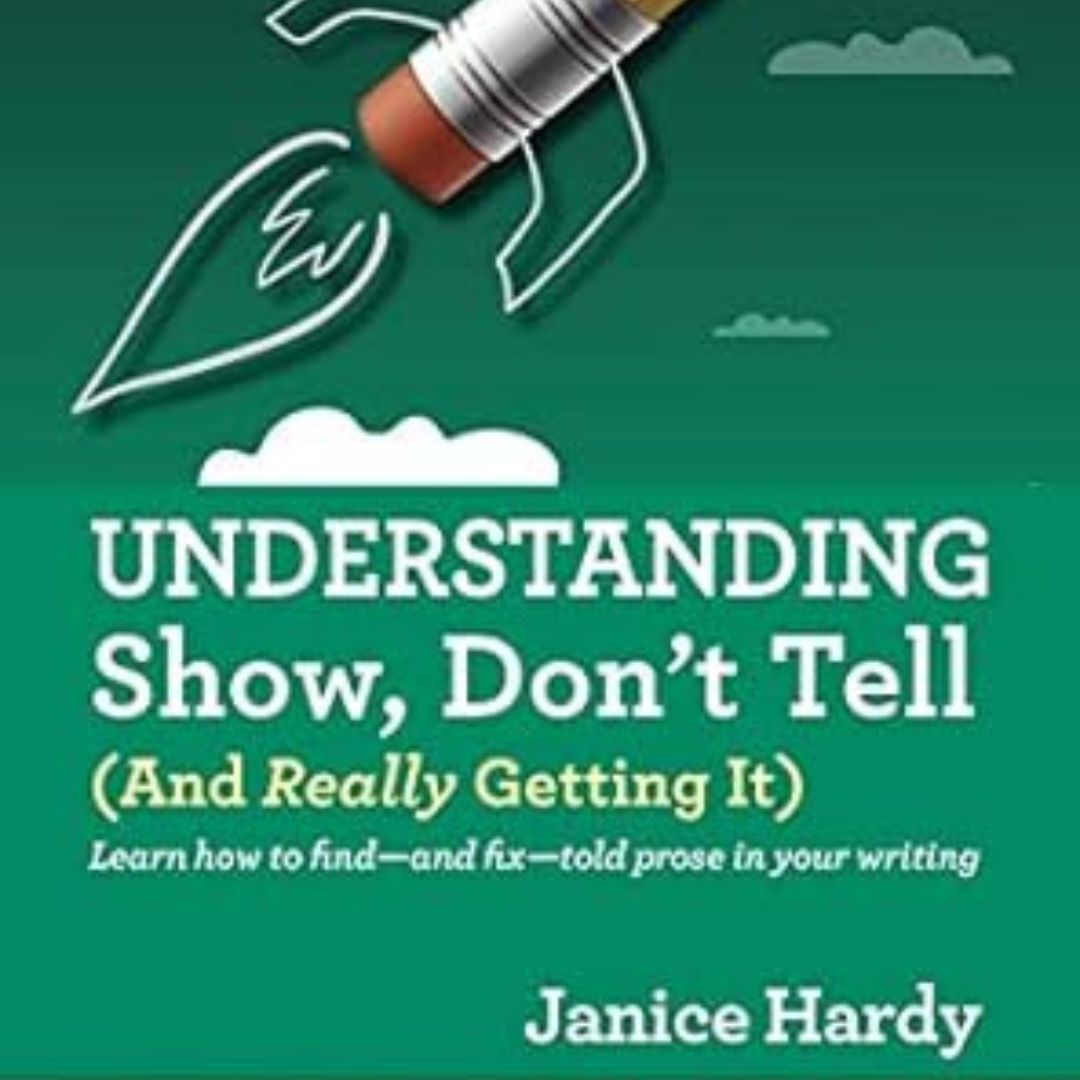
Do you struggle with show, don’t tell? You don’t have to.
Award-winning author Janice Hardy (and founder of the popular writing site, Fiction University) takes you deep into one of the most frustrating aspects of writing–showing, and not telling. She’ll help you understand what show, don’t tell means, teach you how to spot told prose in your writing, and reveal why common advice on how to fix it doesn’t always work.
With in-depth analysis, Understanding Show, Don’t Tell (And Really Getting It) looks at what affects told prose and when telling is the right thing to do. It also explores aspects of writing that aren’t technically telling, but are connected to told prose and can make prose feel told, such as infodumps, description, and backstory.
Her easy-to-understand examples will show you clear before and after text and demonstrate how telling words change the prose. You’ll learn how to find the right balance between description, narrative, and internalization for the strongest impact. These examples will also demonstrate why showing the wrong details can sound just as dull as telling.
This book will help you:

  • Understand when to tell and when to show
  • Spot common red flag words often found in told prose
  • Learn why one single rule doesn’t apply to all books
  • Determine how much telling is acceptable in your writing
  • Fix stale or flat prose holding your writing back

Understanding Show, Don’t Tell (And Really Getting It) is more than just advice on what to do and what not to do—it’s a down and dirty examination and analysis of how show, don’t tell works, so you can adapt the “rules” to whatever style or genre you’re writing. By the end of this book, you’ll have a solid understanding of show, don’t tell and the ability to use it without fear or frustration.

Amazon link: https://www.amazon.com/Understanding-Show-Dont-Tell-Getting/dp/0991536436

Have you read this book? What did you think?

Three Ways Writing and Publishing Your Romance Novel Can Change Your Life

Three Ways Writing and Publishing Your Romance Novel Can Change Your Life

By Tanya Wilde


Are you an aspiring writer with a love story brewing in your heart? Have you ever dreamed of seeing your name on the cover of a bestselling romance novel? While the journey from pen to publication may seem daunting, embarking on the path of writing and publishing your romance novel can be a thrilling, transformative experience that changes your life in wonderful ways!

What do you think? Are you ready for it?

Without further ado, here are three ways writing and publishing your romance novel can change your life if you just decide to take the leap.

1. You learn how to look inside yourself

So, this might not sound very appealing, especially if it terrifies you to think about what you might find when you do look inside yourself!

You draw upon past experiences. A hurt. A trauma. A joyful memory.

This is the beauty of crafting your characters and their stories. Every time you look withinside yourself, you grow and evolve alongside your characters. You heal alongside them. Or perhaps you just laugh alongside them. There is healing in laughter too! Your writing allows you to delve into your innermost thoughts and feelings on certain topics and help you make sense of them.

You learn something new about yourself with every story you write. Whether on a conscious or subconscious level.

And you apply it to your next book.

2. Learn to overcome fears

Not eliminate fears, just conquering them and conquering them again and again. Fear will always be a part of you. It’s natural. It’s human. And that’s not a bad thing! The only time fear might become a bad thing is when you allow it to rule your decisions.

I remember when I hit publish on my very first book.

Oh, all the butterflies churning in my belly! The fear of my book getting only one-star reviews. The fear of not having done enough. The fear of being laughed at. But that fear only lasted as long as I hovered over the publish button. The moment I clicked, the weight of it disappeared. Was it gone entirely? No. But having the weight cleared, my mind cleared as well. So what if there are bad reviews? So what if I get laughed at? So what if there are mistakes? I can just fix them.

With each book, there will be a new fear. Or the same fear. And with each word you write, with each book you publish, you overcome it.

There is strength in that.

There is magic in that.

3. You change the lives of your readers

You help them look inside themselves. You help them overcome fear. You hand them pages and pages of possibilities to draw from. If this heroin/hero can do it, so can I! You give them situations and themes they can relate to and feel less alone in the world.

You give them laughter.

You give them tears.

You give them book boyfriends!

There’s the Sweet Valley High book quote (at least according to my memory) I read when I was still in school. It goes like this:

And if I touch the heart of another, then my walk on this earth is more precious than gold.

This quote has stayed with me for years and years.

To me, this is what writing romance books is all about! Those little touches that span from your heart (and fingers) to theirs.

In conclusion, writing and publishing your romance novel is not only about just telling a love story; it’s about embarking on a journey of self-discovery, creativity, and personal growth. So, if you have a story burning inside you, don’t be afraid to pick up your pen, follow your heart, and share your love with the world through the magic of romance writing. Who knows? It just might change your life in ways you never imagined.

Speaking of which, if you have published a romance novel or several, how has that changed your life?


Tanya Wilde is an award-winning historical romance author with over twenty published books. When she’s not meddling in the lives of her characters or pondering names for her imaginary big, white greyhound, she’s off on adventures with her partner in crime. Wilde lives in a town at the foot of the Outeniqua Mountains, South Africa.